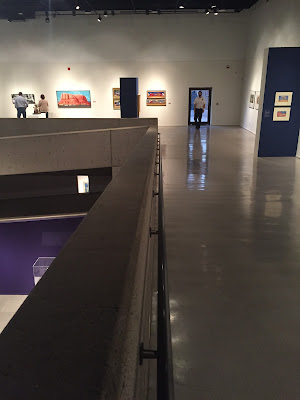
A good indicator of the cultural identity of any American city, in my opinion, is it's art museum. At the Tucson Art Museum the combination of the permanent collection and special exhibitions showcased the narrative of American westward expansion, but also the global significance of western art. The actual layout of the museum is like a reverse Guggenheim (New York) in the respect that it's a ramp that descends in a rectangular form. The museum contains respective European and modern collections, which includes Rodin, some Impressionists, and a great collection of folk art.
One of the current exhibitions on view at the museum was about Dutch-born artist Henry Balink, who did remarkable portraits of Southwestern Native Americans. The exhibition was supported largely from the private collection of Howard and Marilyn Steele who I was fortunate to meet the same day later on at the Tuscon Symphony Orchestra. I interpreted Balink's portraits as a nod toward traditional Dutch portraiture based on positioning of sitters and the cropping of the torsos. Yet, Balink added vibrant and sun toned colors in his portraits to make his own distinction upon a culture he found inspiring.
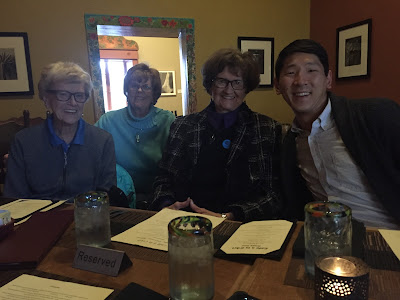
After the museum, my aunts treated me to a wonderful dinner at the the museum cafe with friends Jack Doyle and Ann Forsberg-Doyle. I had a great time at the museum, a wonderful dinner, and then a great night at the symphony. Who ask for a better culture packed day in Tucson?
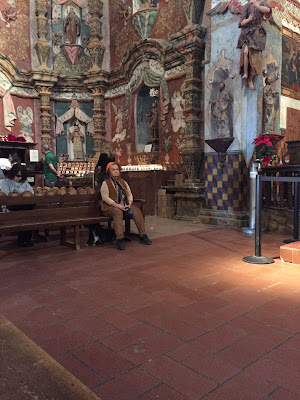
Toward the southern side of Tucson there is an old Spanish church known as the Mission San Xavier del Bac. Recently, NPR discussed the cultural and historical significance of the church as a melting pot of cultures; Chicano, Spanish, Catholic, and Native American. While I was visiting the city my aunts took me to visit the Mission and it was an incredible experience.
The Mission has a distinctive Moorish-inspired architecture that blends with the landscape, but also signifies to visitors that it is an unusual and religious place. The pale exterior colors of the native mud plaster give way to vibrant and rich hues within the church. Much restoration goes into preserving the church because of the arid dessert climate and the materials used for construction.
The church is an exciting example of living history of similar churches that used to be more frequent throughout the region. It was great to see and learn about the historical precedent of the church, it's continual usage as a place of worship, and to hear about the dialogue in helping to preserve it for the future.