In addition to Oak Park having a museum dedicated to Ernest Hemingway's birthplace, there is a tangential museum located just down the block from his birth home. The museum is in the lower level of the Oak Park Arts Center, which was originally built as the 1st Church of Christ, Scientist and now used a concert and performance venue. The museum covers Hemingway's personality, writings, and interactions with the village - he did attend the local high school, Oak Park and River Forest High School. And after he served in World War I he was given a hero's welcome home. Oak Park celebrates Hemingway's connection with the village by many annual events every year and is very proud to have such a cultural icon rooted here. Personally, I'm happy to have had learned more about Hemingway and I hope to reread many of his writings soon.
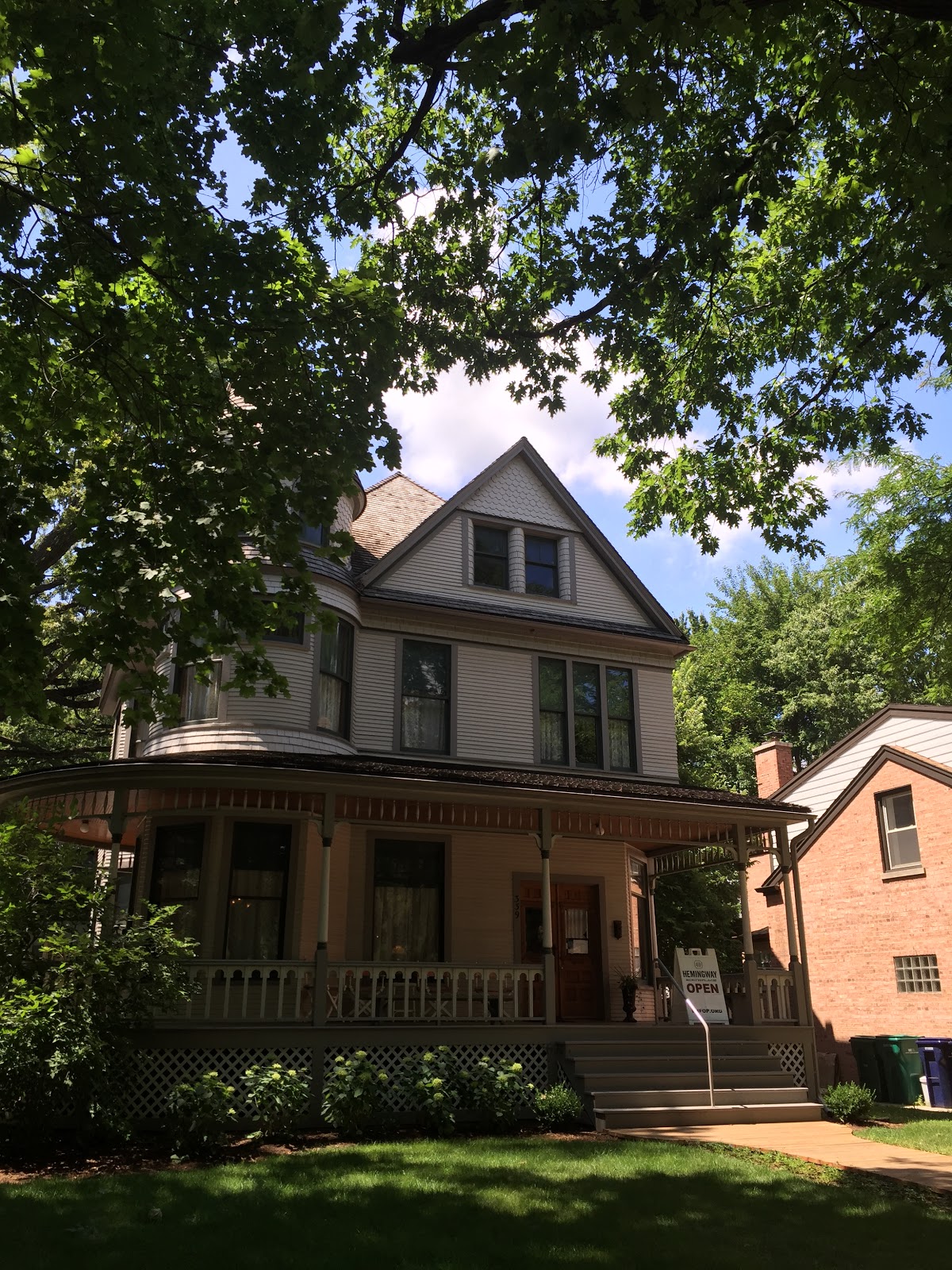
A couple of weeks ago John and I were able to visit another Oak Park landmark--Ernest Hemingway's birthplace. Hemingway was born in a typical Victorian-style home with several bedrooms and featured a new modern convenience: an indoor bathroom. The kitchen sink also had a pivoting stool to sit on while washing dishes. Something we should definitely bring back for kitchens today.
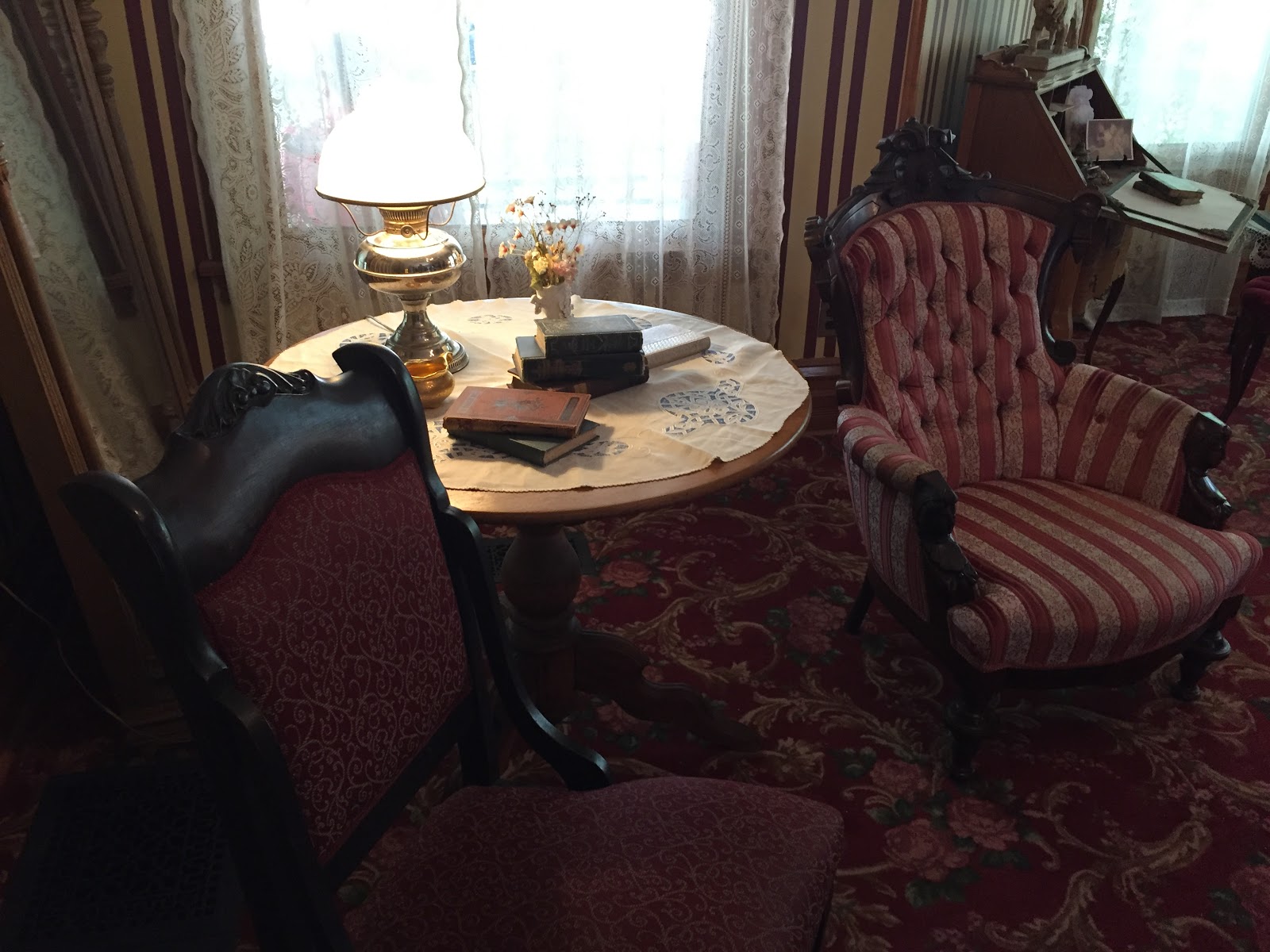
When we visited we were able to take an hour-long tour through the house that was mostly restored to its original condition when Hemingway was a young boy. The tour focused on highlighting life during the late 19th and early 20th centuries, not so much about Hemingway individually.
An urban myth about Hemingway, when asked about Oak Park, was that he once said it was filled with 'wide lawns and narrow minds'. What became apparent to me after touring his birthplace and his museum, just down the block, was that his writing was so compelling and modern that he became popular very quickly. The impact of Hemingway on Oak Park through his writing was elevated by his dynamic and interesting personal life. It's great to have such a rich and interesting figure related to Oak Park and I'm thankful to live in place so deep with history and culture.
The deep south came to Oak Park, IL a couple of weeks ago with a production of Harper Lee's To Kill a Mockingbird. Read and performed by thousands of students each year as a true American literary standard, a preview performance allowed John and me to see the play for free in the heart of the village. Most likely chosen as homage to Lee's sequel to her book, the play was very appropriate in regards to current events pertaining to the on-going destructive nature of American systemic racism and class division. Some specific commentary of the production noted the inclusion of harsh language, particularly the n-word, and also the use of realistic KKK costumes. The language and the costumes were shocking and disturbing, children were present, but in the understanding of recent unfortunate events, the country (including Oak Park) needs reminders like Mockingbird to encourage open discussions and thoughtful reflections. The play is a wonderful didactic expression of the perspectives of children and innocence in a world of violence, hate, and intolerance. Lee's literary contribution is forever empowered by the contemplation of human experiences unique and attuned to American history.


Located about six miles away from downtown Portland at the Alpenrose Dairy is a fun and rustic (to say the least) little western-style village that gets decked out for the holidays. Christmas in Dairyville features small 'stores' with two large model train sets, a confectionery selling donuts, a concession stand, and many stores/rooms filled with antiques and animatronic santas and elmos. The small village was really festive for families with children and it even had its own currency (pictured at the bottom) for Dairyville dollars. The largest attraction in the town, surprisingly was not Santa, but for Storybook Lane, which was a mixture of wonderland village, decorated for Christmas, telling the Christmas story, depicted with live animals that were mostly sleeping behind plexiglass and wire inside miniature barns and cottages. My one disappointment was not being able to eat any cheese or ice cream at the dairy. But the highlight was being able to meet Felipe--an adorable donkey who liked being petted on his head.
 |
| Midget track?... |
 |
| Goat? |
 |
| Felipe! |